From Concept to Product: The Development Process of Smart Pet Products
News Details
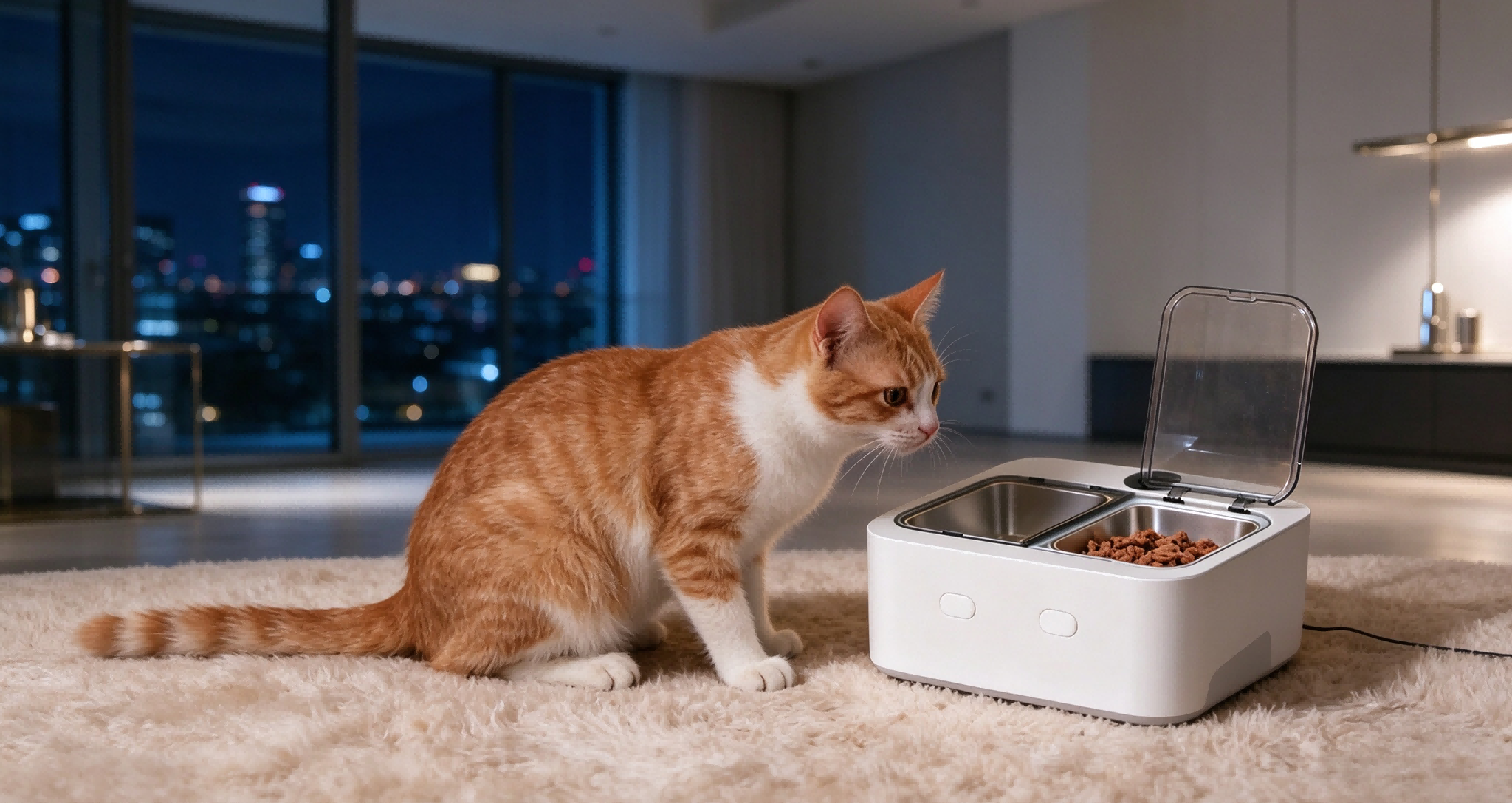
Turning a smart pet product idea into a finished product takes more than a good concept. It requires market research, product design, engineering, testing, manufacturing, and quality control.
For pet brands, wholesalers, and retailers, working with an experienced OEM/ODM manufacturer can make this process much easier. Instead of building an R&D and production team from scratch, brands can work with a partner that already understands smart feeders, wet food feeders, and self-cleaning cat litter boxes.
So, what does the smart pet product development process actually look like?
Step 1: Define the Product Idea
Every successful product starts with a clear problem to solve.
For example, a brand may want to develop:
- An automatic cat feeder for busy pet owners
- An automatic dog feeder with remote control
- A wet food feeder that keeps meals fresh
- A self-cleaning cat litter box
- A smart pet product for multi-pet homes
At this stage, it is important to define the target customer, key use case, expected price, and sales channel.
A product sold through premium pet stores may need a different design from one sold through mass retail. Likewise, a product for small apartments may need a more compact structure.
Therefore, a clear product brief should come before detailed engineering.
Step 2: Research the Market and User Needs
Next, the product idea needs to be tested against real market needs.
Ask simple but important questions:
- What problem does the product solve?
- Who will use it?
- What features do customers actually need?
- What price range makes sense?
- What products already exist?
- Where can the new product be different?
For example, customers may want an automatic feeder that does more than release food at a set time. They may also value app control, remote feeding, backup power, easy cleaning, and reliable portion control.
Similarly, buyers looking for a smart litter box may care about automatic waste handling, odor control, safety sensors, low noise, and app functions.
This research helps prevent a common mistake: adding too many features without improving the actual user experience.
Step 3: Choose OEM or ODM Development
Once the product direction is clear, the next step is to decide how much of the product needs to be developed.
OEM Development
With OEM, a brand can start with an existing product platform and customize selected elements.
This can include:
- Logo
- Packaging
- Product color
- User manual
- Accessories
- Selected product functions
OEM is often a practical choice when a brand wants to enter the market faster.
ODM Development
ODM goes further.
The manufacturer works with the brand to develop or change the product based on specific requirements. This can involve the structure, appearance, functions, hardware, or user experience.
For example, Winpointsupports OEM and ODM development for automatic feeders, wet food feeders, and self-cleaning cat litter boxes. Its approach can help brands start with an existing product platform or develop a more customized solution.
Therefore, the right model depends on the product goal, budget, timeline, and level of customization required.
Step 4: Create the Product Design
After the product requirements are confirmed, engineers and designers can begin developing the product.
At this stage, several areas need to work together.
Industrial Design
The product needs to look attractive while remaining practical.
For smart pet products, the design should also consider:
- Product size
- Pet access
- Ease of cleaning
- Material choice
- Assembly
- Storage space
- Retail packaging
For example, a feeder designed for small apartments may need a compact body and simple controls.
Functional Design
The team then decides how the product should work.
An automatic feeder may need scheduled feeding, remote feeding, portion control, and backup power.
A smart litter box may need automatic cleaning, waste separation, odor control, infrared sensors, weight sensors, and app connectivity.
Winpoint's current smart self-cleaning litter box, for example, combines WiFi and app control, automatic cleaning, odor control, infrared and weight sensors, OTA updates, and a washable structure.
Step 5: Select Materials and Components
Good product development also depends on choosing the right materials and components.
For pet products, manufacturers need to consider safety, durability, cleaning, and long-term use.
For wet food products in particular, food-contact parts need careful material selection. The product should also be easy for users to remove and clean.
Electronic components require the same level of attention. Motors, sensors, control boards, batteries, WiFi modules, and power systems all need to work together.
Therefore, component selection should consider both product performance and the target market's requirements.
Step 6: Build and Test Prototypes
A prototype turns the idea into something that can be tested.
This is one of the most important stages because problems that are difficult to see on a drawing often become obvious in a physical sample.
The development team may test:
- Product dimensions
- Feeding accuracy
- Motor performance
- Noise level
- Sensor response
- App connection
- Lid or door movement
- Cleaning process
- Pet access
- Material durability
Then, the design can be adjusted based on the test results.
For example, Winpoint's smart cat litter box development case included prototype testing and adjustments to the product size, sensor sensitivity, and app connectivity based on the partner's market requirements.
This step helps reduce costly changes after mass production begins.
Step 7: Test the User Experience
Technical performance is only part of product quality.
A smart pet product also needs to be easy to use.
Consider the complete customer journey:
Unboxing → Setup → Daily Use → Cleaning → Maintenance
If customers cannot connect the app easily, understand the controls, or remove a food tray, even a technically advanced product may receive poor feedback.
For this reason, usability testing should be part of the development process.
In Winpoint's smart cat litter box project, the team worked on the app interface and product design to make setup and daily operation easier. The project also included usability testing and design changes based on user needs.
Step 8: Complete Quality and Compliance Testing
Before mass production, the product should go through a complete quality review.
Depending on the product and target market, testing may cover:
- Electrical safety
- Material safety
- Mechanical durability
- Motor performance
- Sensor accuracy
- WiFi connectivity
- Battery performance
- Packaging strength
- Product labeling
International markets may also require specific certifications and test reports.
For example, Winpoint's smart cat litter box project included support for FCC, CE, and RoHS requirements for international markets. Its quality process covered material inspection, production checks, performance tests, and final inspection.
It is better to identify compliance issues before production than after products are already shipped.
Step 9: Prepare for Mass Production
Once the sample is approved, the project moves from development to manufacturing.
At this point, the manufacturer needs to confirm:
- Final product specifications
- Approved materials
- Production drawings
- Packaging
- Quality standards
- Production schedule
- Inspection process
- Shipping plan
A reliable manufacturer should also have a clear quality control system.
For smart products, production testing is especially important because a product may contain many electronic and mechanical parts.
Winpoint uses quality checks across the production process and supports production planning and supply chain management for larger OEM/ODM projects.
Step 10: Launch the Product and Collect Feedback
Product development does not end when the first shipment leaves the factory.
After launch, brands should monitor:
- Customer reviews
- Return reasons
- Product defects
- Warranty claims
- App problems
- Common customer questions
- Sales performance
This information can then be used for the next product version.
For example, a brand may discover that customers want a larger food container, a quieter motor, simpler app setup, or easier-to-clean parts.
As a result, real customer feedback becomes part of the next development cycle.
WinpointCase Study: From Product Idea to Smart Cat Litter Box
A good example of this process is Winpoint's collaboration with an international pet product distributor.
The partner already had sales channels in North America and Europe but did not have its own smart pet product R&D capability. It wanted to develop smart cat litter boxes with automatic cleaning, odor control, app connectivity, and market-specific customization.
Winpoint created a dedicated team involving R&D engineers, product designers, quality specialists, and project managers.
The development process included:
- Understanding the partner's market and target customers
- Defining product functions
- Developing and optimizing the design
- Building prototypes
- Testing sensors and app connectivity
- Improving the user experience
- Completing quality and certification work
- Moving into mass production
- Supporting delivery and after-sales service
The project covered both a mainstream smart cat litter box and a premium white model. The premium version included features such as app control, pet weight tracking, litter usage data, quiet operation, and a larger litter area.
This case shows why smart pet product development works best as a step-by-step process rather than a single manufacturing order.
How Long Does Smart Pet Product Development Take?
The timeline depends on the product and the level of customization.
A private label project based on an existing product can usually move faster because much of the design and manufacturing process is already established.
A deeper ODM project may take longer because it can involve new industrial design, mechanical development, electronic changes, prototypes, testing, and certification.
Therefore, brands should discuss the expected timeline with the manufacturer before setting a launch date.
A clear development plan should include milestones for:
- Product requirements
- Design approval
- Prototype completion
- Testing
- Final sample approval
- Production
- Quality inspection
- Shipment
How to Choose the Right Smart Pet Product Development Partner
The right manufacturing partner should offer more than production capacity.
Look for a supplier with:
- Smart pet product experience
- In-house or strong R&D support
- OEM and ODM capabilities
- Prototype development
- Quality control
- Certification experience
- Stable production capacity
- Clear communication
- After-sales support
It is also useful to check whether the supplier can support more than one product category.
For example, Winpoint's product range includes smart automatic feeders, wet food feeders, cat water fountains, and self-cleaning cat litter boxes. This allows a pet brand to develop several products with one manufacturing partner.
Turn Your Smart Pet Product Idea Into Reality
A smart pet product does not become successful simply because it has smart technology.
The product must solve a real problem, work reliably, look right for the target market, and remain easy to use.
That is why the development process matters.
From the first idea and product brief to design, prototyping, testing, certification, mass production, and market feedback, every stage affects the final result.
For pet brands, retailers, and distributors that want to develop automatic feeders, wet food feeders, or smart self-cleaning cat litter boxes, Winpoint provides OEM and ODM support across the product development and manufacturing process.
Visit Winpoint Products to discuss your smart pet product idea and explore a path from concept to finished product.


