Automatic Cat Feeder vs Traditional Feeding: Which Is Better?
News Details
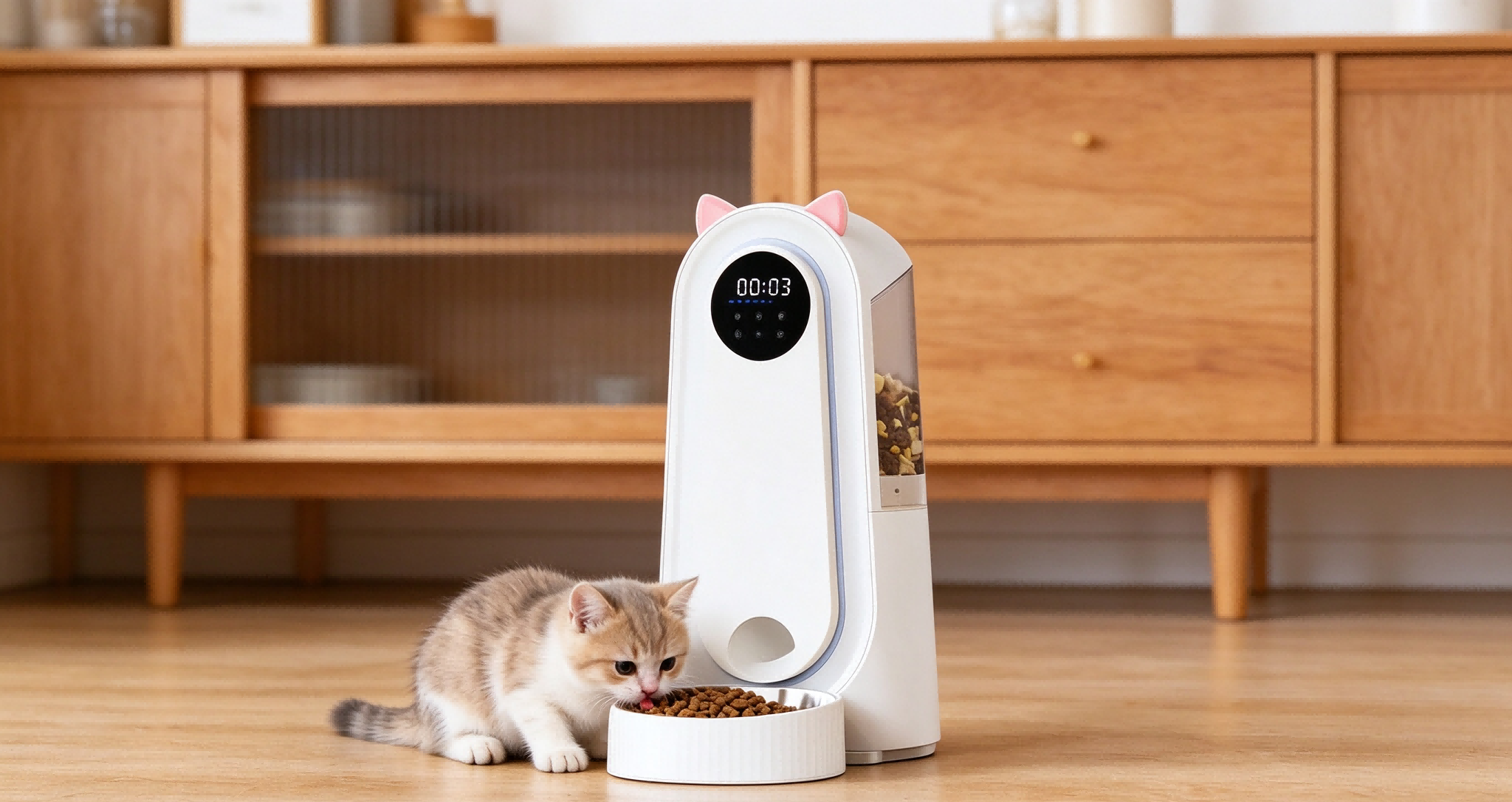
Feeding your cat on time is an important part of daily pet care. However, busy work schedules, travel, and changing routines can make it hard to serve every meal at the same time. This is why many cat owners are comparing an automatic cat feeder with traditional feeding.
Both methods have clear benefits. Traditional feeding gives owners direct control over each meal, while an automatic cat feeder can help maintain a regular feeding schedule with less daily effort.
So, which option is better? The answer depends on your cat's eating habits, your daily routine, and the type of food you serve.
What Is Traditional Cat Feeding?
Traditional cat feeding means preparing and serving food by hand. Owners decide when to feed their cats, how much food to offer, and when to refill the bowl.
This method is simple and does not require an electronic device. It also allows owners to watch their cats eat and notice changes in appetite.
However, traditional feeding requires a regular time commitment. If you work long hours or leave home early, it may be difficult to keep meal times consistent.
What Is an Automatic Cat Feeder?
An automatic cat feeder releases a set amount of food at scheduled times. Depending on the model, owners can use a timer, control panel, Bluetooth, or a mobile app to manage meals.
Some smart feeders also offer remote feeding, cameras, voice interaction, and backup battery power.
For example, WinpointProducts offers automatic cat feeders with scheduled feeding, remote control, backup power, and detachable food hoppers and bowls. Selected models also include a camera for remote pet monitoring.
These features can make daily feeding easier, especially for owners who spend much of the day away from home.
Automatic Cat Feeder vs Traditional Feeding: Key Differences
FeatureAutomatic Cat FeederTraditional FeedingFeeding scheduleCan follow preset timesDepends on the owner's routinePortion controlProgrammable on selected modelsMeasured by the ownerDaily convenienceReduces routine feeding tasksRequires daily attentionRemote feedingAvailable on smart modelsNot availablePet monitoringAvailable on camera-equipped modelsRequires direct observationPower requirementsSome models need power or batteriesNo power neededCleaningDevice parts need regular cleaningBowls need regular cleaningInitial costHigherUsually lowerWet food supportRequires a suitable wet food modelEasy to serve by hand
In short, automatic feeders offer more convenience, while traditional feeding offers greater direct control over each meal.
5 Benefits of Using an Automatic Cat Feeder
1. Keep Feeding Times Consistent
Cats often become familiar with a regular daily routine. However, owners may be delayed by traffic, meetings, or unexpected tasks.
An automatic cat feeder can release food at preset times, even when you are not home. As a result, your cat's feeding schedule depends less on your daily movements.
2. Manage Meal Portions More Easily
Portion control is important because feeding too much can contribute to unwanted weight gain.
Many automatic feeders let owners set meal sizes and feeding times. This can make it easier to follow a feeding plan recommended by a veterinarian.
However, portion settings vary by model and kibble size. Owners should check the actual amount dispensed and adjust the settings to suit their cat's needs.
3. Make Busy Days Easier
For office workers, frequent travelers, and people with changing schedules, feeding a cat at the same time every day can be challenging.
An automatic feeder helps reduce this daily task. Moreover, app-controlled models allow owners to manage feeding schedules remotely.
This does not replace all pet care, but it can make everyday routines more manageable.
4. Monitor Your Cat When You Are Away
Some smart automatic cat feeders include a built-in camera and two-way audio.
These features let owners check whether their cat is near the feeder and observe mealtime behavior. They can also provide reassurance during a busy workday.
Winpoint's Smart Pet Feeder with Camera FC-S02 combines app-based feeding control, a 4L food hopper, remote video monitoring, and backup battery support. Its detachable hopper and bowl also make routine cleaning easier.
For owners who want more than basic food dispensing, this type of feeder combines feeding convenience with remote monitoring.
5. Reduce Dependence on Manual Feeding
Traditional feeding requires someone to prepare each meal. In contrast, an automatic feeder can handle scheduled portions of dry food without requiring the owner to be present for every feeding.
Nevertheless, owners still need to refill the hopper, clean the device, check its operation, and provide fresh water.
An automatic feeder supports daily care; it does not remove the need for regular attention.
Benefits of Traditional Cat Feeding
Although automatic feeders offer several advantages, traditional feeding remains a good choice for many households.
Direct Observation
When you feed your cat by hand, you can see how much it eats and notice changes in appetite, chewing, or behavior.
This is particularly useful for cats with health problems or special dietary needs.
More Flexible Food Choices
Traditional feeding makes it easy to serve dry food, wet food, fresh portions, or meals that require special preparation.
By comparison, a standard dry food dispenser is not designed to handle every type of food.
Lower Initial Cost
A traditional bowl is inexpensive and simple to use. It also has no electronic parts, app connection, or power supply to maintain.
Therefore, it may be the better choice for owners who prefer a basic feeding routine or have limited need for automation.
Can an Automatic Cat Feeder Dispense Wet Food?
Not every automatic cat feeder can handle wet food. Standard dry food feeders use a hopper and dispensing mechanism designed for kibble. Wet food requires a different design because it can spoil and may be harder to dispense.
If your cat eats wet food, choose a feeder specifically designed for it.
Winpoint Products offers a smart wet food feeder with cooling, pre-meal heating, and a programmable automatic lid. These functions help manage meal timing and food temperature when owners are away.
However, owners should follow the product's instructions for food storage, cleaning, and safe use. A wet food feeder should not be treated as a substitute for proper food handling.
Which Feeding Method Is Better for Different Cat Owners?
The best choice depends on your lifestyle and your cat's needs.
- Busy professionals: An automatic cat feeder can help keep meals on schedule during long workdays.
- Frequent travelers: A smart feeder can support planned meals while you are away, but a trusted person should still check on your cat.
- Cats on portion-controlled diets: A programmable feeder may help deliver measured meals, provided its portion settings are suitable.
- Cats eating wet food: Traditional feeding or a dedicated wet food feeder is more suitable than a standard dry food dispenser.
- Cats with special medical needs: Follow your veterinarian's feeding instructions. Direct supervision may be necessary.
- Owners who are home most of the day: Traditional feeding may be sufficient if meal times and portions are managed consistently.
For many households, a combination of both methods also works well. An automatic feeder can handle routine dry food meals, while the owner serves wet food or provides supervised meals when needed.
How to Choose the Right Automatic Cat Feeder
If you decide to buy an automatic feeder, consider these key features before making a choice.
Feeding schedule and portion settings: Check how many meals can be programmed and how portions are measured.
Food capacity: Choose a hopper size that fits your cat's daily intake and your refill routine.
Power backup: A battery backup can help keep feeding schedules running during a power outage, depending on the model.
App and camera functions: Remote control and video monitoring may be useful if you spend long hours away from home.
Cleaning and maintenance: Removable food-contact parts can make routine cleaning easier.
Food compatibility: Confirm which kibble sizes and food types the feeder supports.
Reliability: Test the dispensing mechanism and verify that scheduled meals are delivered correctly before relying on the device.
Winpoint Products provides a range of automatic pet feeders with different capacities and features. Retailers and distributors can explore its product range and OEM/ODM options at www.winpointpet.com.
Final Verdict: Automatic Cat Feeder or Traditional Feeding?
An automatic cat feeder is often the better choice for owners who want consistent meal times, convenient portion settings, and less dependence on their daily schedule. Smart models can also provide remote feeding and monitoring.
Traditional feeding, however, remains useful for direct observation, flexible meal choices, and cats that need close supervision.
Ultimately, the best method is the one that meets your cat's nutritional needs and fits your routine. Before choosing, consider your cat's diet, health, age, and eating habits.
For pet brands, retailers, and distributors looking to offer practical feeding solutions,Winpoint Products provides automatic cat feeders, camera-equipped smart feeders, and wet food feeding systems. Visit Winpoint Products to explore available models and discuss product requirements.


